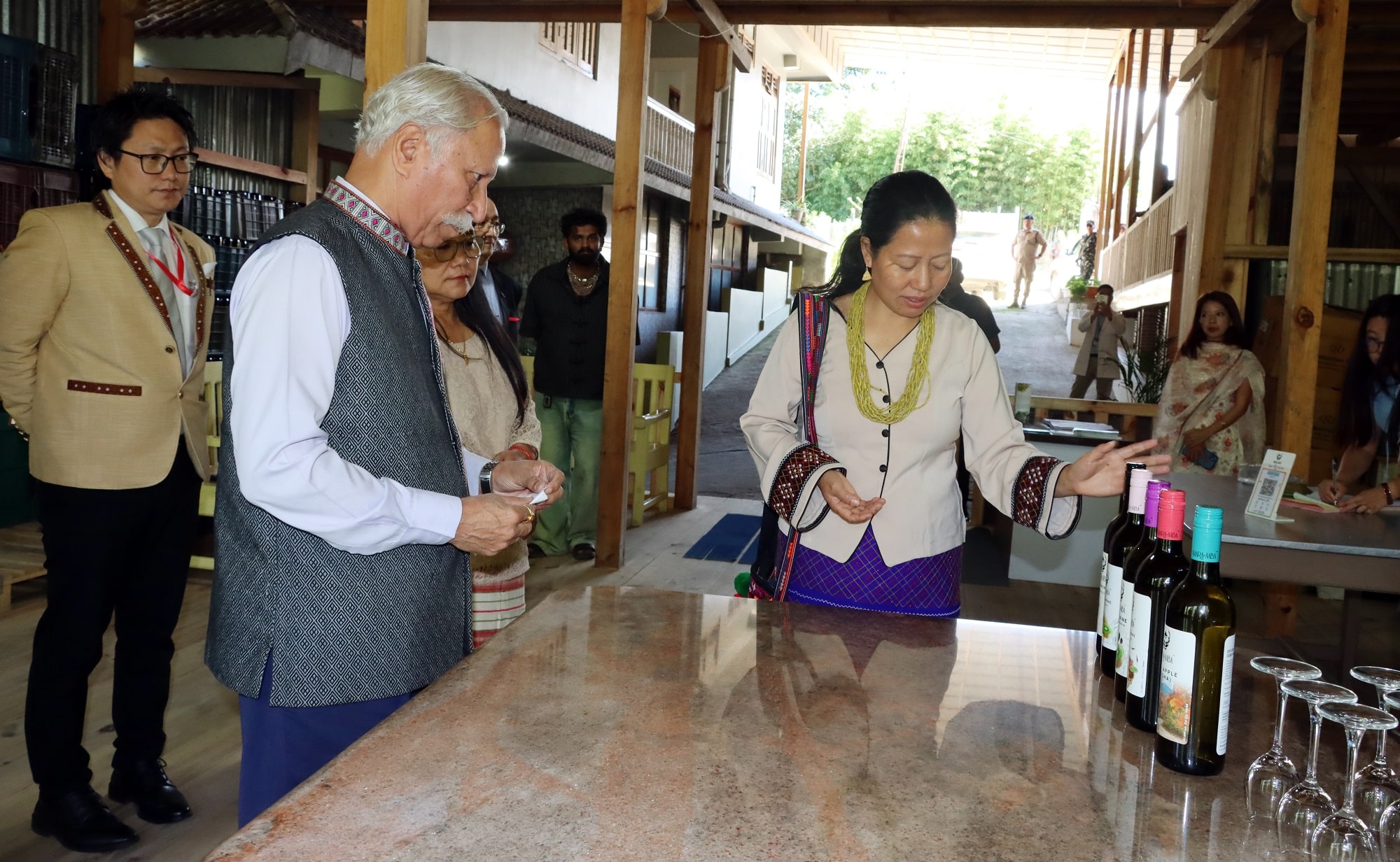
NAHARLAGUN, Sept 7: Chief Minister Pema Khandu on Monday inaugurated the State Agriculture Information Hub-cum-Farmers’ Hostel at Naharlagun and flagged off the Matsya e-Vaahini and e-Rickshaw, marking a significant step towards strengthening agriculture and allied sectors as sustainable and profitable avenues of livelihood and entrepreneurship in Arunachal Pradesh.
Congratulating the Agriculture Department for creating the facility, Khandu described the Agriculture Information Hub-cum-Farmers’ Hostel as the first infrastructure of its kind in the state dedicated exclusively to farmers. He said the facility should become a centre for capacity building, knowledge-sharing, technical training and professional exposure for farmers from across Arunachal Pradesh.
“This infrastructure should not merely be used; it should be used meaningfully,” Khandu said, stressing that farmers should be able to stay at the hostel while attending week-long or longer specialised training programmes on crops and allied activities.
He directed the Departments of Agriculture, Horticulture, Fisheries and Animal Husbandry to make maximum use of the facility by organising training programmes tailored to the opportunities and challenges of the state. The departments, he said, should bring in experts from across the country to expose farmers to modern technologies, technical know-how, value addition and market-oriented farming practices.
“Arunachal farmers are hardworking. What they need is greater technical knowledge, better market linkages and professional guidance on value addition,” the Chief Minister said.
Khandu said the state government has accorded special priority to agriculture and allied sectors since 2019, with greater coordination among the Agriculture, Horticulture, Fisheries and Animal Husbandry departments yielding significant results. He said the sectors were earlier handled under separate ministerial portfolios, resulting in inadequate coordination, and that the government subsequently brought them under a coordinated ministerial framework.
Highlighting Arunachal Pradesh’s diverse agro-climatic conditions, ranging from tropical and subtropical foothills to temperate and alpine regions, Khandu said the state possessed immense potential for agriculture and horticulture.
“With such diverse climatic conditions, Arunachal Pradesh is one of the best States in the country for farming. We must make full use of this natural advantage,” he said.
The Chief Minister also stressed the need for continuous training of departmental officers so they could effectively guide farmers on modern technologies, government schemes and emerging opportunities.
He highlighted the role of Self-Help Groups (SHGs), Farmer Producer Organisations (FPOs), Farmer Producer Companies and other collective enterprises in promoting organised entrepreneurship. Nearly 1.50 lakh women in Arunachal Pradesh, he said, have joined the SHG movement over the past decade, including women from remote villages who have received training and taken up livelihood and business activities.
Khandu said FPOs and farmer producer companies were also being promoted across districts to help farmers access government schemes, banking support and professional business opportunities. He announced that the state government would soon launch a major cooperative movement by bringing together the Cooperative Department, Rural Development Department and Panchayati Raj institutions.
Emphasising access to finance, Khandu urged farmers and entrepreneurs to connect with formal banking institutions and make effective use of government subsidies and institutional financing.
“Farmers work hard, but unless they receive adequate returns, they will eventually lose motivation. Organisations such as FPOs, producer companies, SHGs and cooperatives must help them access finance, markets and professional support,” he said.
Khandu identified value addition as a major priority for agriculture and horticulture. He called for effective utilisation of the upcoming Mega Food Park at Banderdewa, where FPOs and producer companies could undertake food processing and value addition. He also referred to the Mini Food Park at Namsai, where work is underway and is expected to be completed soon.
“Our products must move beyond farms. We need a clear, product-wise roadmap to take them through value addition and into the market,” he said.
The Chief Minister said Arunachal’s strategic location and the presence of the Indian Army, ITBP and other Central Armed Police Forces provided a significant market for locally produced agricultural and allied products. He said the government was promoting the supply of local commodities to the armed forces through cooperatives, with the initiative already being implemented in several districts.
Khandu urged departments to assess the requirements of the armed forces and accordingly train farmers, provide seeds and facilitate production of commodities required by them.
He also underlined the market potential in fisheries, poultry, dairy, pork and other livestock products, noting that the state continues to depend heavily on supplies from outside despite being predominantly meat-consuming.
“Despite being a predominantly meat-consuming society, we continue to depend heavily on products brought from outside the State. This is a market opportunity that our farmers and entrepreneurs must seize,” he said.
Referring to the Northeast’s development roadmap towards 2047, Khandu said Arunachal Pradesh had been entrusted with responsibilities relating particularly to poultry, dairy, meat and fisheries under an exercise coordinated by the Ministry of Development of North Eastern Region. He said extensive consultations had been held over the past year and the final report was submitted at the North Eastern Council meeting in Shillong.
The roadmap, he said, would incorporate short-, medium- and long-term strategies, with the state government providing support and funds for priority initiatives.
On oil palm cultivation, Khandu said India imports edible oil worth around Rs 80,000 crore annually, highlighting the potential for increasing domestic production. He said foothill areas of Arunachal Pradesh offered favourable climatic conditions for oil palm cultivation and informed that the state had set a target of bringing 36,000 hectares under oil palm cultivation over the next five years.
Processing infrastructure is also being developed in suitable areas, including parts of Dibang Valley, Luksin and East Siang, he said.
Khandu also congratulated coffee growers on the launch of the Organic Coffee initiative under the Mission Organic Value Chain Development for North Eastern Region (MOVCD-NER), describing coffee cultivation as a promising opportunity for farmers.
He further highlighted the Agriculture Policy, Apiculture Policy and Horticulture Policy approved by the State Cabinet, expressing confidence that the policies would generate new opportunities for farmers and young entrepreneurs.
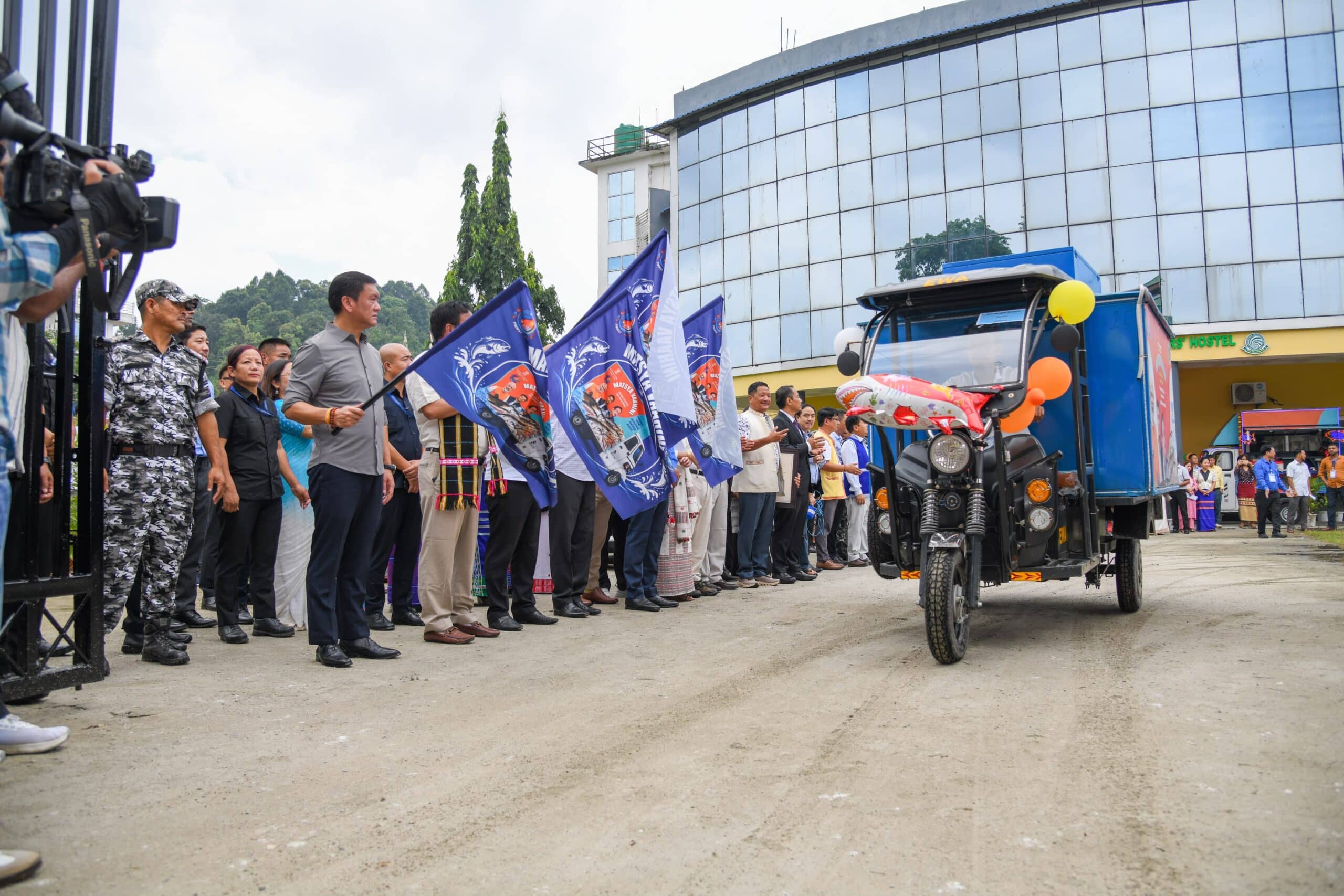
Later, Khandu flagged off the Matsya e-Vaahini and e-Rickshaw aimed at strengthening transportation and market access for fish farmers. He said the initiative would reduce transportation time, improve market connectivity and help address the problem of middlemen taking away a substantial share of farmers’ profits.
The e-Rickshaw, he said, would provide an additional environment-friendly transport solution for the fisheries sector and complement the Centre’s efforts to strengthen fisheries and allied activities.
During his visit to the newly inaugurated Farmers’ Hostel, Khandu inspected the rooms and directed officials to provide furniture and other essential facilities immediately. He directed the concerned Commissioner to ensure that funds for the furniture were made available within the current financial year so that the facility could become fully operational without delay.